top of page

The ʻOnipaʻa Peace March: A Nation in Motion

Every year, on the days surrounding January 17th, the Hawaiian nation moves as one. The ʻOnipaʻa Peace March is not a parade; it is a solemn, powerful declaration of sovereignty and a commemoration of the illegal overthrow of the Hawaiian Kingdom in 1893.

We march to honor Queen Liliʻuokalani, who surrendered her authority under protest to prevent the bloodshed of her people. We march to remind the world that our kingdom still exists. We march because we remain ʻonipaʻa—immovable, steadfast, and deeply rooted in our truth.

The Route: From Our Ancestors to Our Seat of Power

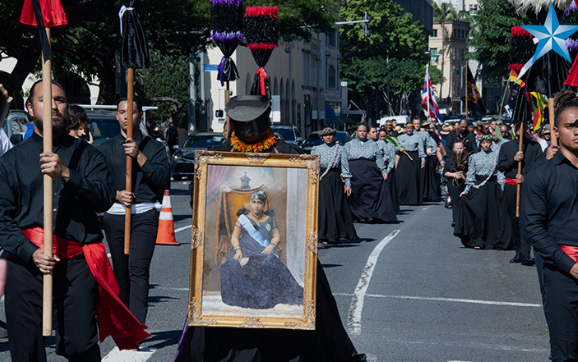
The 1.7-mile journey physically connects our ancestral leaders to our historical seat of government. Thousands walk at a contemplative pace, guided by the sound of oli (chants), the steady carrying of the purple kāhili (feather standards), and the portrait of Queen Liliʻuokalani.

The Origin: Mauna ʻAla (Royal Mausoleum)

Location: 2261 Nuʻuanu Avenue.

Significance: The gates of Mauna ʻAla serve as the gathering point. This sacred ground is the final resting place of Hawaiian royalty, including King Kalākaua and Queen Liliʻuokalani. Morning protocols and traditional ceremonies are conducted here to honor our ancestors before the march begins.

The Path: Nuʻuanu Avenue to Beretania Street

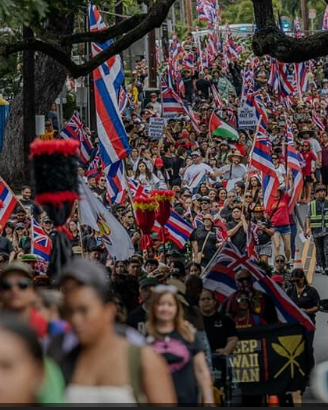
Significance: The procession moves southward down Nuʻuanu Avenue, turning onto Beretania Street toward downtown Honolulu. The streets are filled with the visual power of the Hae Hawaiʻi (the Hawaiian flag) waving in unity.

The Destination: ʻIolani Palace

Location: 364 South King Street.

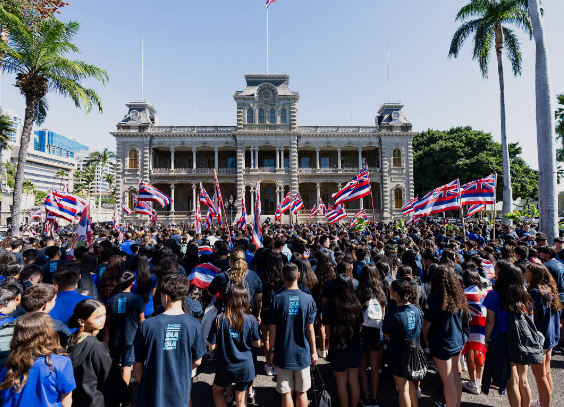
Significance: The only royal palace on U.S. soil. This was the residence of our monarchs and the site of Queen Liliʻuokalani’s unjust imprisonment in 1895. The march concludes on the palace grounds, transforming the site of our kingdom’s historical trauma into a gathering place for education, resilience, and nation-building.

A Decade of Resurgence: The March Since 2013

While the modern tradition of the ʻOnipaʻa Peace March began during the 1993 centennial, the year 2013 marked a massive turning point. Commemorating the 120th anniversary of the overthrow, 2013 saw a powerful resurgence in participation from a new generation of Kānaka Maoli.

Since 2013, the march has solidified into a highly organized, educational demonstration of Hawaiian resilience:

Youth Integration

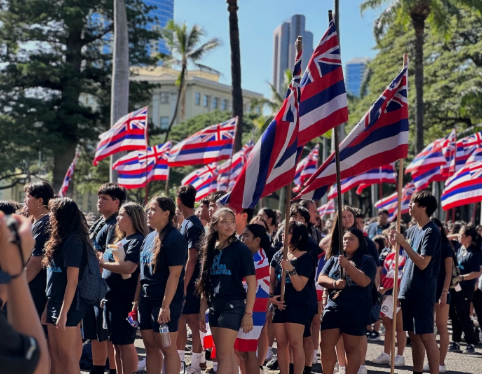
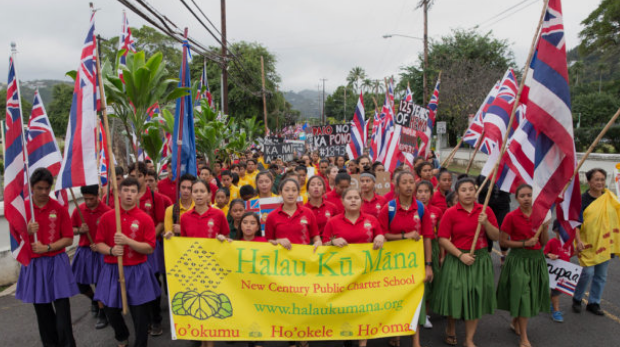
Schools across the islands, including thousands of haumāna (students) and kumu (teachers) from Kamehameha Schools and Hawaiian immersion programs, now march in uniform. This ensures the true history of the kingdom is learned on the ground, not just in textbooks.

Protocol and Discipline

The modern march is defined by strict cultural protocol. It is executed with absolute discipline, proving to observers that our people are united, organized, and politically aware.

Global Visibility

Through the use of modern media and live-streaming since 2013, the march now reaches a global audience, constantly reminding the international community of Hawaiʻi's status as a nation under prolonged illegal occupation.

The Queens Court: Our Stance on the Frontlines

At The Queens Court, the ʻOnipaʻa Peace March is a core pillar of our civic and cultural duty. We step onto the pavement carrying the blueprint of Queen Liliʻuokalani.

Our presence in the march is a demonstration of mana wahine. We walk to uphold the financial, educational, and political autonomy she fought for. When the women of The Queens Court march from Mauna ʻAla to ʻIolani Palace, we do so with the understanding that we are the living continuation of her legacy. We protect our history so we can dictate our future.

Witness the Movement: Video & Image Gallery

The Oli at Mauna ʻAla

Listen to the opening chants that ground the march in respect and ancestral protocol.

The March Down Nuʻuanu

Aerial or street-level footage of the massive procession moving toward downtown Honolulu.

The Queens Court in Action

Highlight footage of our organization marching, standing steadfast, and representing mana wahine on January 17th.

bottom of page